by Janis / 0 comments - Orginally published:10th March 2026
An insight into a Carthusian monastery
Our National Trust cards are enjoying an outing in the beautiful county of North Yorkshire.
During our delightful Yorkshire EV road trip, we squeezed in a visit to the magnificent ruins of the Carthusian Mount Grace Priory, House and Gardens in Staddle Bridge, North Yorkshire. Mount Grace Priory is owned by the National Trust but managed by English Heritage. National Trust members can visit for free.
Mount Grace Priory is around 12 miles north of Thirsk and is nestled within the woodlands of the North York Moors National Park. It’s in a beautiful location, and you’ll feel like you are a world away from the hustle and bustle of daily life.
When visiting Mount Grace Priory, it isn’t just the stunning ruins that you can immerse yourself within, but you can also visit the historic Mount Grace House and wander amongst the gorgeous gardens.

Why not Pin it for later?
So, let’s grab our National Trust cards and explore Mount Grace Priory, House and Gardens.
Where is Mount Grace Priory?
How to get to Mount Grace Priory
- By Train
The nearest train station to Mount Grace Priory is Northallerton, which is around 6 miles away.
- By Car
Mount Grace Priory is 12 miles north of Thirsk and 6 miles north-east of Northallerton, near the A19. Look out for the brown English Heritage direction signs. The car park is a 150m walk to the Priory.
There is a small charge for National Trust members; it is free for English Heritage members.
To find the nearest EV charger to Mount Grace Priory, check zap-map.com/live
A little history on Mount Grace Priory
A glimpse of Carthusian lifeMount Grace Priory in North Yorkshire is one of England’s most fascinating medieval monastic sites, notable for being the best-preserved Carthusian monastery in the country. It was founded in 1398 by Thomas de Holland, 1st Duke of Surrey and Earl of Kent, a powerful noble and nephew of King Richard II.

Beautifully hidden doorway

Stepping through time
The Carthusian order is known for its extremely strict, hermit-like way of life. Unlike other monastic communities where monks lived and worked communally, Carthusians lived largely alone in small, self-contained cells arranged around a cloister, joining together only for certain services.
Mount Grace was one of the last monasteries built in Yorkshire before the Reformation, and its peaceful woodland setting in the foothills of the Cleveland Hills reflected the order’s contemplative spirituality.

Exploring the Carthusian Priory ruins
The priory flourished through the late medieval period but met the same fate as many monastic houses when Henry VIII dissolved the monasteries in 1539. Mount Grace Priory was one of the last in Yorkshire to be suppressed. After dissolution, the site passed into private hands, and by the 17th century, part of the monastic buildings, especially the guest house, were converted into a manor.

Mount Grace House
In the 19th and early 20th centuries, the estate was owned by industrialist Sir Lowthian Bell, who remodelled the house and developed the gardens in the Arts and Crafts style. Today, the ruins of the priory, cloister and monks’ cells remain remarkably intact.
Stay informed
You will find us across many forms of social media. You will find our latest posts, some throwbacks, links to historic events with our 'On this day' posts, across Facebook, X, Bluesky & Threads. Each week, themed visual content on Instagram, and our narrated travels on YouTube. Collections of the images in our posts are also collated into boards on Pinterest.
Exploring the ruins of Mount Grace Priory
History frozen in timeWhen we begin exploring the ruins of Mount Grace Priory, it’s like stepping into a quieter, more reflective side of medieval England. Tucked beneath the edge of the North York Moors, this former Carthusian monastery has an atmosphere that’s almost hauntingly peaceful, even in ruins.

Ruins of Mount Grace Priory
As we wend our way amongst the remains of the priory church, you can still sense the scale and simplicity of the building; designed not for grandeur, but for prayer and solitude.

Ruins of the priory church

Emotive church symbol
The weatherworn stonework, which would once have been graced by stained glass windows, the numerous broken arches, and open sky above, gives it that timeless sense of “history frozen”, where every step seems to echo with centuries of monastic life.

Once a grand monastery
We love wandering amongst any priory or abbey ruins; you really feel like you are walking in the footsteps of the ancient past, and Mount Grace was no exception.
Escape for a few days
Are you in search of a tranquil hideaway to relax and unwind in, while you discover the beautiful British countryside?
Browse through the handpicked properties and unique retreats at Holiday Cottages.
Inside the Carthusian monks’ cells
A serene glimpse into the pastI must admit the true highlight of Mount Grace Priory is exploring the ancient cloisters. This is where the intriguing layout reveals how unusual the Carthusian order was compared to other monasteries, and how they lived an almost hermit-like existence.

Carthusian Monk’s bedroom

Upstairs within the Monk’s cell
Instead of large communal dormitories, which are often found in priories, the monks at Mount Grace Priory lived in 25 individual cells. All the cells are arranged around the cloister walk, and each has its own small garden, where their lives were devoted to silence and contemplation.

Walled garden within the Monk’s cell
Walking the cloister paths today, it’s easy to imagine the quiet rhythm of daily life, slow footsteps, whispered prayers, and the simple routines of self-sufficient living. It’s one of those sites where the ruins don’t just show you what was built, they help you picture how it felt to live there, making Mount Grace Priory one of Yorkshire’s most atmospheric and memorable medieval places to explore. It was a fascinating experience.
Discovering more National Trust gardens
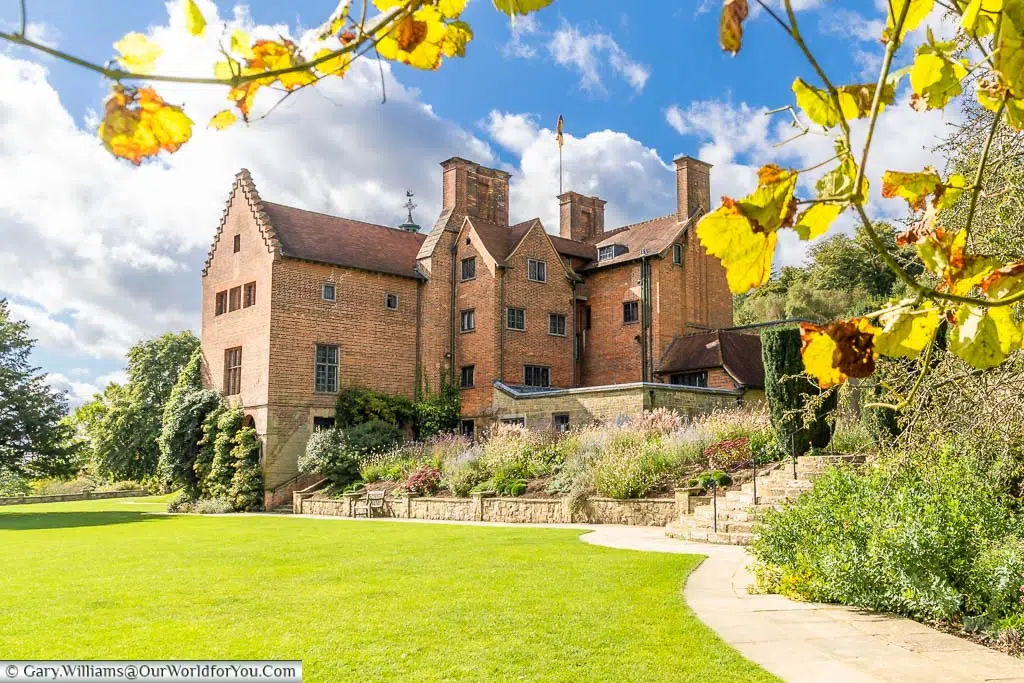
We’ve visited many National Trust sites and explored their beautiful gardens, which are so meticulously kept. A few places that particularly stand out for me are Sissinghurst Castle Garden, Scotney Castle, Chartwell in Kent and Bateman’s in East Sussex.



Discovering Mount Grace House
An Arts and Crafts delightFollowing Mount Grace Priory’s dissolution in 1539 under Henry VIII, part of the complex was transformed into Mount Grace House. This grand 17th century manor was further enhanced in the early 20th century with the delightful Arts and Crafts-style interiors championed by William Morris.

Entrance Hall at Mount Grace House
The beautiful gardens were also developed during this time, all under the watchful eye of the new owner, industrialist Sir Isaac Lowthian Bell.

Interior at Mount Grace House
Today, the house serves as a welcoming focal point for arriving visitors, with exhibitions that link the earlier monastic history to the later decorative world, and the surrounding formal gardens and woodlands provide a tranquil space for reflection and exploration year-round. Walking the paths through the meadow, by ponds, and amid seasonal blooms offers both a historical journey and a peaceful day out in nature.
If, like us, you enjoy visiting the National Trust gardens around the United Kingdom, then grab yourself a copy of the latest ‘Gardens of the National Trust’.
It’s a beautifully illustrated book, and it won’t be long before you’re planning your next trip.

Strolling the gardens of Mount Grace Priory
Arts and Crafts terraced gardensThe beautiful gardens of Mount Grace House are set amid woodland at the foot of the North York Moors. The priory’s Arts and Crafts terraced gardens were rejuvenated in recent years and surround the historic manor house.

Terrace at Mount Grace House
Pathways lead you through mature, richly planted borders on the terraces, with seasonal highlights such as bluebells in spring, roses in summer, fiery Japanese Acer hues in autumn and delicate snowdrops in winter. The multi-coloured gardens are such a pleasure to stroll amongst, offering delightful scents as you go through.

Tranquil spot in Mount Grace House gardens
From the formal terrace spaces to the wildflower meadow and peaceful Monks’ Pond, there’s a harmony here between cultivated planting and more naturalistic landscape. You can wander out into the orchard and stroll the mown meadows or simply enjoy the quiet sense of reflection.
Places to visit in North Yorkshire
During our one-week EV road trip around North Yorkshire, we visited some beautiful places. They included the incredibly historic towns and cities of York, Whitby, Ripon and Harrogate. We also detoured north of Whitby to visit the quaint hillside port village of Staithes and the nostalgic seaside town of Saltburn-by-the-Sea.


* This post may contain links to affiliated sites where we earn a small commission at no additional charge to you.
