by Janis / 0 comments - Orginally published:2nd June 2026
Strolling in the footsteps of ancient history
We love visiting National Trust sites, and there are plenty to discover amongst the beautiful rolling hills across North Yorkshire’s Dales and Moors.
During our enjoyable Yorkshire EV road trip, we were looking forward to visiting the breathtaking ruins of the Cistercian monastery of Fountains Abbey and Studley Royal Water Garden. This ancient site is just on the outskirts of the beautiful little city of Ripon.
Fountains Abbey is owned by the National Trust but maintained by English Heritage. National Trust and English Heritage members can visit for free.
The magnificent Fountains Abbey and Studley Royal Water Garden is also a UNESCO World Heritage Site, designated in 1986.

Why not Pin it for later?
So, let’s grab our National Trust cards and explore the ancient ruins of Fountains Abbey.
Where is Fountains Abbey?
How to get to Fountains Abbey
- By Bus
The main local route is the 139 bus operated by Dales & District / Procters Coaches. It runs from Ripon Bus Station to Fountains Abbey Visitor Centre.
- By Car
Fountains Abbey is only around 3.5 miles from Ripon. From the B6265 turn-off to Pateley Bridge, follow the brown signs for Fountains Abbey. Entering from the A1, it’s 12 miles north of Harrogate (A61).
There’s a free car park for National Trust members, and for EV drivers, there are 12 11kW electric vehicle charging points available in Car Park A. Drivers will require their own cables to charge.
Use ‘Fountains Abbey’ for your Sat Nav, do not use the postcode, or you can find it by using What3words ///subsets.parsnip.panther
A little history on Fountains Abbey & gardens
From tiny acornsThe remarkable Fountains Abbey began life in 1132 when a group of rebellious monks left St Mary’s Abbey in York to live a stricter Cistercian lifestyle in the serene and secluded Skell Valley. Over the next 400 years, Fountains Abbey grew into one of the richest monasteries in England.

Fountains Abbey & the River Skell
Well, that was until Henry VIII dissolved the monasteries in 1539, disbanding all the Catholic buildings of worship across England, Wales, and Ireland. This was due to the pope refusing to grant the King’s divorce from Catherine of Aragon. This left the dramatic ruins you see today.

Temple of Piety
In the 18th century, the nearby Studley Royal estate was transformed into an elegant Georgian water garden by John Aislabie, and later his son William, who created ornamental lakes, canals, follies and sweeping landscaped views around the abbey ruins. Today, the two sites blend medieval history with one of England’s finest landscaped gardens, earning UNESCO World Heritage status.
Stay informed
You will find us across many forms of social media. You will find our latest posts, some throwbacks, links to historic events with our 'On this day' posts, across Facebook, X, Bluesky & Threads. Each week, themed visual content on Instagram, and our narrated travels on YouTube. Collections of the images in our posts are also collated into boards on Pinterest.
Visiting Fountains Hall
With many tales to tellThe elegant mansion of Fountains Hall, found within the grounds of Fountains Abbey, was built between 1598 and 1611 by Sir Stephen Proctor. Proctor rather controversially used stone taken from the nearby ruins of Fountains Abbey after the monasteries had been dissolved.

Fountains Hall
Fountains Hall is a beautiful mix of late Elizabethan and Jacobean architecture. Over the centuries, the hall passed through several wealthy families, including the Aislabies of Studley Royal, but eventually fell into decline and was even used partly for farm storage. It has been everything from a grand country house to a courthouse.
The hall was renovated and modernised between 1928 and 1931, and the Duke and Duchess of York (later King George VI and Queen Elizabeth) often stayed there as guests of Lady Doris Vyner. A touching memorial window can be seen to the loss of a son and daughter of the Vyner’s during WWII.

Inside Fountains Hall

Vyner Memorial Window
During the Second World War, it housed evacuees and schoolchildren, before being restored by the National Trust in the 1980s. Today it sits quietly beside the abbey ruins and water gardens, giving a lovely glimpse into Yorkshire’s post-medieval history.
Places to visit in North Yorkshire
During our one-week EV road trip around North Yorkshire, we visited some beautiful places. They included the incredibly historic towns and cities of York, Whitby, Ripon and Harrogate. We also detoured north of Whitby to visit the quaint hillside port village of Staithes and the nostalgic seaside town of Saltburn-by-the-Sea.


Exploring the ruins of Fountains Abbey
An extraordinary step into the pastOoh, I do love wending my way amongst ancient ruins, it leaves me with such an ethereal feeling.
Fountains Abbey lies in a beautiful part of North Yorkshire and is tucked away within a lush valley. It’s easy to see why the 13 Benedictine monks who left St Mary’s Abbey in York chose this dale for their quieter existence in the world.

The grand ruins of Fountains Abbey
The monks had a serious disagreement over how strict monastic life should be. They wanted a simpler, more disciplined life, so they headed into the wilderness of the Skell Valley and founded a new monastery. Three years later, the monks were accepted into the Cistercian order, known for hard work, prayer, and living far from busy towns and cities.

Ruins of the Hospitum
At first, life there was incredibly tough and so remote; the monks lived through harsh winters, poor harvests, and even famine, but the abbey slowly grew into one of the richest and most powerful monasteries in England.

The nave of Fountains Abbey
The Cistercians were excellent farmers and traders, and Fountains Abbey became hugely successful through sheep farming and wool production. In medieval England, wool was basically a goldmine, and the abbey exported fleece across Europe.
Over the next few centuries, the monks built the huge church and impressive stone buildings you can still see today. At its height, the abbey housed around 500 people, including monks, servants, and lay brothers who handled much of the manual labour. So, you can imagine its enormity.

Huby’s Tower

Inside Huby’s Tower
Despite the peaceful setting, life there was busy and highly organised, revolving around prayer services, farming, study, and maintaining the vast estate.
Discovering more National Trust gardens
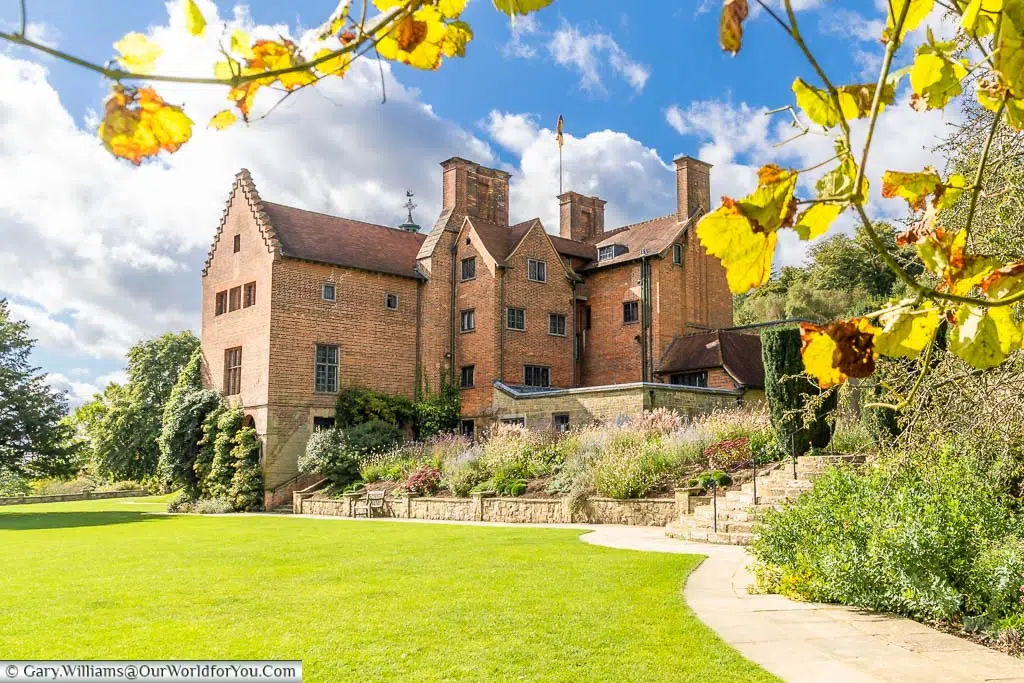
We’ve visited many National Trust sites and explored their beautiful gardens, which are so meticulously kept. A few places that particularly stand out for me are Sissinghurst Castle Garden, Scotney Castle, Chartwell in Kent and Bateman’s in East Sussex.


Meandering amongst Fountains Abbey
An extraordinary historic legacyThen everything changed in the 1530s during the reign of Henry VIII. When the King broke away from the Roman Catholic Church, he ordered the Dissolution of the Monasteries, shutting down religious houses across England. Devastation ensued across the country, and the vast majority of Catholic places of worship would never be the same again.

Vaulted cellarium
Fountains Abbey surrendered to the Crown in 1539. The monks were pensioned off, valuables were stripped away, and parts of the buildings were dismantled for stone and lead. What had once been one of the wealthiest monasteries in the country quickly fell into ruin.

Inside the nave

Fountains Abbey Tower
Oddly enough, the abbey’s ruined state is part of why it survived. In the 18th century, the surrounding Studley Royal estate was landscaped into one of the finest Georgian water gardens in England, and the dramatic ruins became a romantic centrepiece for visitors. It’s such a pleasure to stroll amongst.

Centuries of history at Fountains Abbey
Walking through it now, you still get a real sense of the scale and quiet atmosphere of medieval monastic life, especially when the great British weather changes almost every hour.
Escape for a few days
Are you in search of a tranquil hideaway to relax and unwind in, while you discover the beautiful British countryside?
Browse through the handpicked properties and unique retreats at Holiday Cottages.
Visiting Studley Royal Water Garden
A serene embrace with natureNeighbouring Fountains Abbey is Studley Royal Water Garden; this beautiful garden has a fascinating layered history. It began in the early 1700s when John Aislabie, a politician who’d fallen from grace, retreated to his Yorkshire estate and poured his energy into creating an elaborate Georgian water garden.

Studley Royal Water Garden
Instead of fighting the natural landscape and surroundings, he used the River Skell, canals, ponds, cascades and carefully framed views to create something incredibly elegant and theatrical.
Later, his son William expanded the gardens and eventually linked them with the dramatic ruins of nearby Fountains Abbey. The contrast between the peaceful, formal gardens and the haunting abbey ruins is what makes the place so special and emotive today.

Strolling Studley Royal Water Garden
What’s amazing is that so much of the original design survives; it’s so serene strolling amongst the gorgeous countryside that it’s hard to imagine the bustling town of Harrogate and the cathedral city of Ripon are just a stone’s throw away.
Our video of Ripon
We have created a little YouTube video of Ripon. Why not take a look?
Also, why not subscribe to our YouTube channel and get the latest clips as we post them?
* This post may contain links to affiliated sites where we earn a small commission at no additional charge to you.
