by Janis / 0 comments - Orginally published:8th March 2019
Lost Scouts, Scottish Martyrs & a little TLC…
Yes, I’m still steadily ticking off London’s famous Magnificent Seven cemeteries, and my fascination with these atmospheric places shows no sign of fading. This time, our journey brought us to Nunhead Cemetery, one of the quieter and lesser-known members of the group.
Our excuse was simple — we’d already been visiting West Norwood Cemetery, just up the road, and it would have felt rude not to pop into Nunhead as well. Along with West Norwood, Nunhead is one of only two Magnificent Seven cemeteries located south of the River Thames.
Nunhead Cemetery is also known as All Saints’ Cemetery and was consecrated in 1840. Like the other six, it was created during the 19th century to relieve the dangerous overcrowding of London’s parish churchyards. We visited Brompton Cemetery last year, and I’m still undecided which one should be next — perhaps the most famous of all, Highgate Cemetery.

Why not Pin it for later?

A lone WWII headstone
On a bright but bitterly cold January Sunday morning, we wrapped up warm and set off to uncover some of the stories quietly waiting to be discovered among the headstones.
Where is Nunhead Cemetery?
How to get to Nunhead Cemetery
- By Train
The nearest station to Nunhead Cemetery is Nunhead station. It’s an overground service and can be accessed from London Victoria & London Blackfriars. The journey takes around 15 minutes.
Scottish Political Martyrs Memorial
A Monument to Reform, Resistance and ExileAs you enter Nunhead Cemetery through the North Gate, your eye is immediately drawn to the striking obelisk dedicated to the Scottish Political Martyrs. Standing 33 feet (10 metres) high, it is one of the cemetery’s most prominent landmarks.

The Scottish Martyrs memorial
The memorial commemorates five men who were imprisoned for campaigning for parliamentary reform at the end of the 18th century. Convicted between 1793 and 1794, they were sentenced to penal transportation to New South Wales, Australia — a punishment designed to silence political dissent.
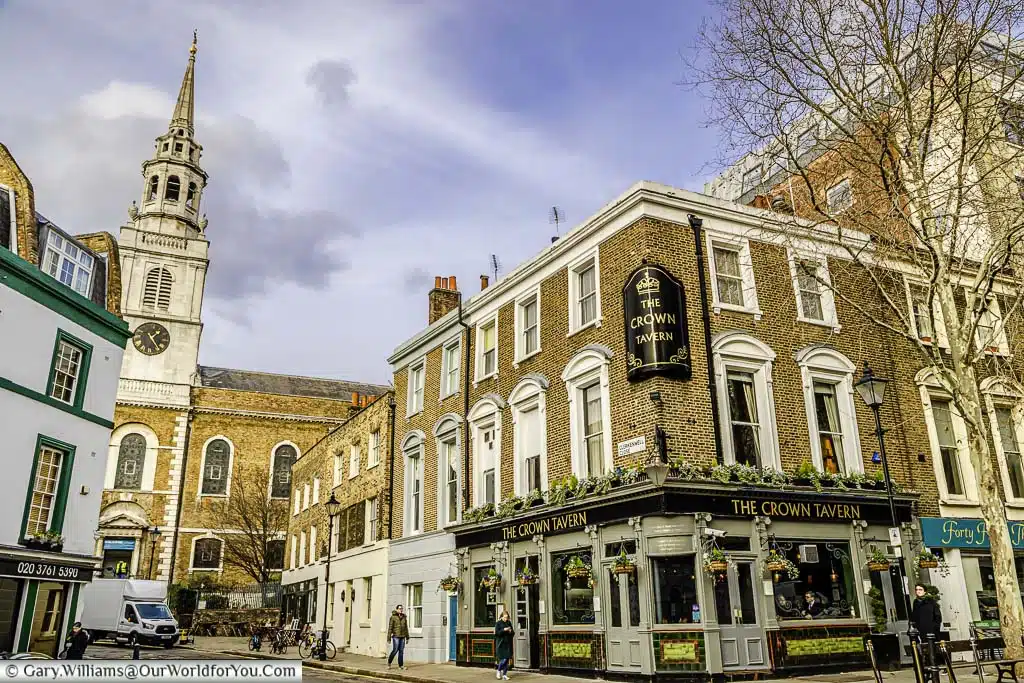
The Crown Tavern, Clerkenwell
The idea to erect this memorial was conceived in 1837 at the Crown Tavern (formerly the Crown & Anchor). Coincidentally, we had visited Clerkenwell just the day before and photographed the tavern, unaware of its connection to Nunhead — one of those wonderful moments where stories unexpectedly link together.
Stay informed
You will find us across many forms of social media. You will find our latest posts, some throwbacks, links to historic events with our 'On this day' posts, across Facebook, X, Bluesky & Threads. Each week, themed visual content on Instagram, and our narrated travels on YouTube. Collections of the images in our posts are also collated into boards on Pinterest.
Leysdown Tragedy Memorial
The Heartbreaking Loss of Young Lives at SeaOne of the most moving memorials in Nunhead Cemetery tells the story of nine young boys who tragically drowned off the Isle of Sheppey on 4 August 1912.

Memorial to the Leysdown Scout Troop tragedy
Eight of the boys were scouts from the 2nd Walworth Scout Troop, and the ninth was from the training ship Arethusa. They had travelled from London the day before to attend a summer camp in Kent. Just two miles from the Kent coast, a sudden gale struck their boat, causing it to capsize with devastating consequences.
The current marble book-shaped memorial, erected in 1992, stands on the original plinth that once supported a life-size bronze scout statue installed in 1914. Sadly, that statue was stolen in 1969, but the story — and the loss — remains powerfully present.
Vincent Figgins
Typeface Pioneer and Printing InnovatorBuried in a Grade II listed family tomb, Vincent Figgins played a crucial role in shaping the typography we still use today.

The Vincent Figgins tomb
A successful typeface founder, Figgins was instrumental in the development of modern fonts during the early 19th century. He died in Peckham in 1844, and although his grave is relatively modest, his legacy lives on every time we read printed text.
Doulton Terracotta Mausoleum
Decorative Craftsmanship in Funerary ArchitectureOne of the most visually striking monuments in the cemetery is the restored Stearns family mausoleum, built in 1902.

The Stearns mausoleum
Constructed from Doulton terracotta, it mirrors the same distinctive material used for Sir Henry Doulton’s mausoleum at West Norwood Cemetery. Now Grade II listed, it’s a beautiful example of how craftsmanship and industry found expression even in memorial architecture.
We have a little book on our shelves that we sometimes delve into when we're about to hit an area of London.
Packed full of historical facts, and broken down into the different regions of London, it's a great resource to help you see what's hidden in plain sight.
Available in Kindle & Hardback editions, it's an excellent addition to anyone's collection who loves London.

An Iconic London View
St Paul’s Cathedral on the HorizonNunhead Cemetery isn’t just about the graves. Take a moment to sit quietly and look beyond the treetops, and you’ll be rewarded with a distant yet unmistakable sight

The view of St Paul’s Cathedral
On a clear day, St Paul’s Cathedral, designed by Sir Christopher Wren, rises on the horizon — a reminder of how these cemeteries remain deeply connected to the wider city.
War Graves at Nunhead Cemetery
Remembering the Fallen of Two World WarsNunhead Cemetery is also home to a significant number of World War I and World War II war graves, lovingly maintained by the Commonwealth War Graves Commission.

Australian war graves
In total, there are 703 identified casualties, with 592 from the First World War. Australian and Canadian graves are individually marked, while many British casualties — scattered throughout the cemetery — are commemorated collectively.

The Screen Wall for WWI
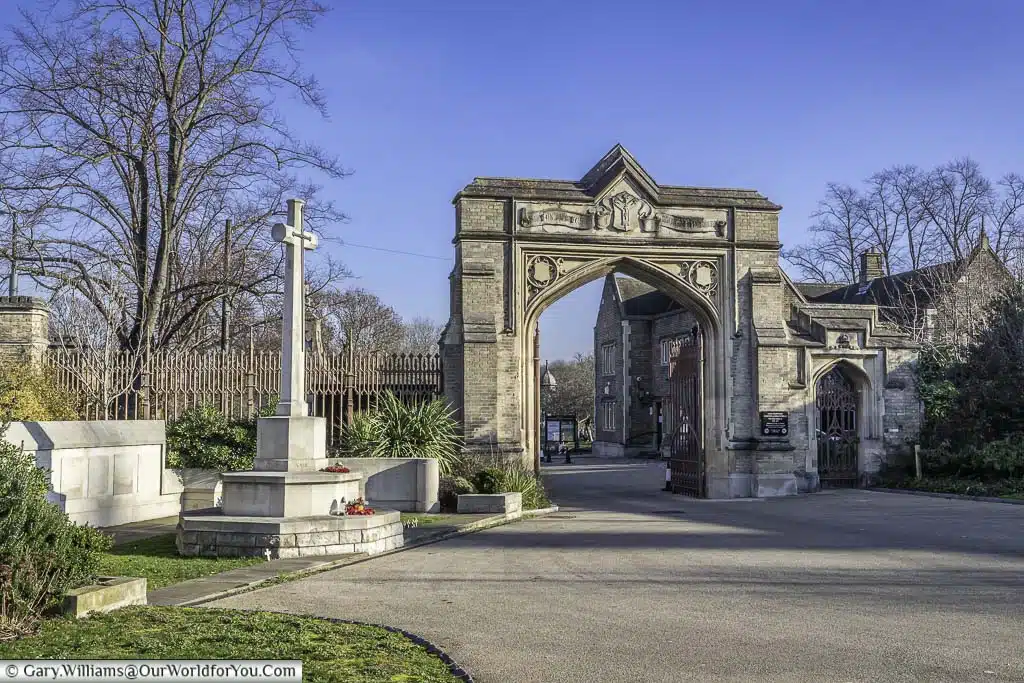
These names are honoured on a Screen Wall inside the main entrance, ensuring none are forgotten.
Do you have a favourite cemetery?
Have you visited any unusual cemeteries around the world, I’d love you to share them with me? Please drop a comment below.
More Stories Among the Stones
Wealth, Theatre and Quiet PhilanthropySome of the most intriguing stories are found off the main paths. The elaborate tomb of John Allan, sculpted by Matthew Noble, is thought to be one of the most expensive monuments in Nunhead.

The tomb of John Allan
Nearby, the touching grave of British actor Calvin G Simpson stands out for its individuality — a reminder that personal expression often speaks louder than grandeur.

The Calvin G Simpson grave
Then there’s Thomas William Wing, a Justice of the Peace for Suffolk, who on his death in 1889 bequeathed £70,000 to support blind members of the Clothworkers’ Company — a quietly remarkable legacy.
The Friends of Nunhead Cemetery
Community Care and RestorationLike many historic cemeteries, Nunhead fell into serious disrepair during the 20th century. It wasn’t until the early 1980s that the Friends of Nunhead Cemetery was formed.

An Angel looking down

Keeping the memory going
Through dedicated volunteer effort, the cemetery was restored, reopened to the public in May 2001, and continues to be cared for today — a true labour of love.
Why not check out more of the Magnificent Seven
If Brompton Cemetery has sparked your curiosity, be sure to explore the other posts in our Magnificent Seven series. Each cemetery offers its own atmosphere, stories, and remarkable characters, from grand Victorian architecture to hidden corners reclaimed by nature. Follow along as we uncover the history, beauty, and quiet drama of London’s great garden cemeteries.


* This post may contain links to affiliated sites where we earn a small commission at no additional charge to you.
